PRIMARY CATEGORY → SQLi
Abuse
There are situations where we face a login panel on a web application and we do not have valid credentials to log in successful
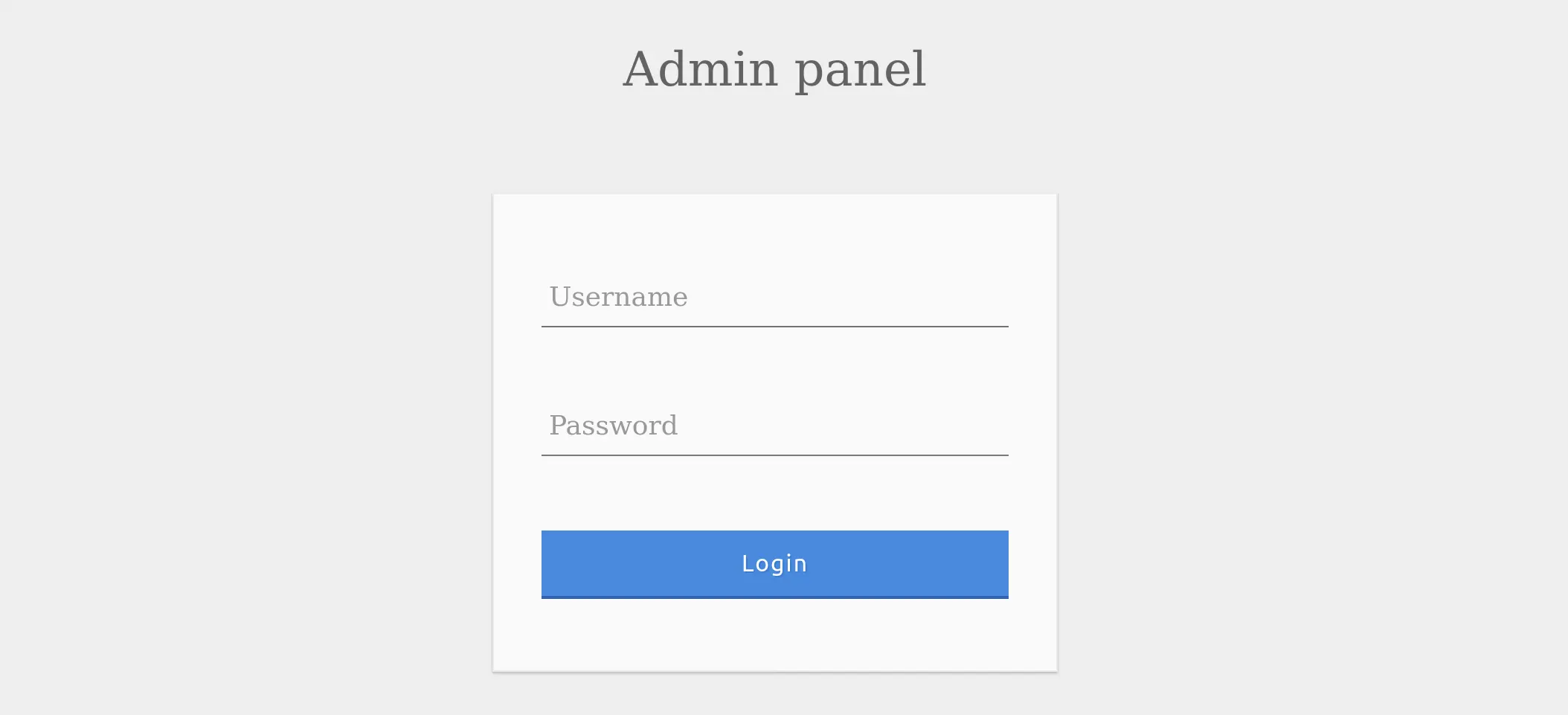
Zoom in
In this case, we could check for SQL Injection by entering one of the following chars
' # %27
" # %22
# # %23
; # %3B
) # %29
If it is vulnerable, we may encounter the following error or something similar instead of a Login failed message

Zoom in
Once we know this, we would need the SQL Query always to return True, regardless of the username and password entered. To do so, we can leverage the OR operator in order to bypass the authentication
Remember that an OR operator always returns TRUE if one of the two conditions is TRUE
Therefore, we can enter the following payload
admin' OR '1'='1Regardless the first condition, the second one will always return TRUE (1=1)
As stated, since the OR operator returns TRUE if at least one condition is TRUE, the authentication attempt will succeed and we will successfully bypass the login form
In this case, this occurs because the admin user exists, and therefore returns TRUE
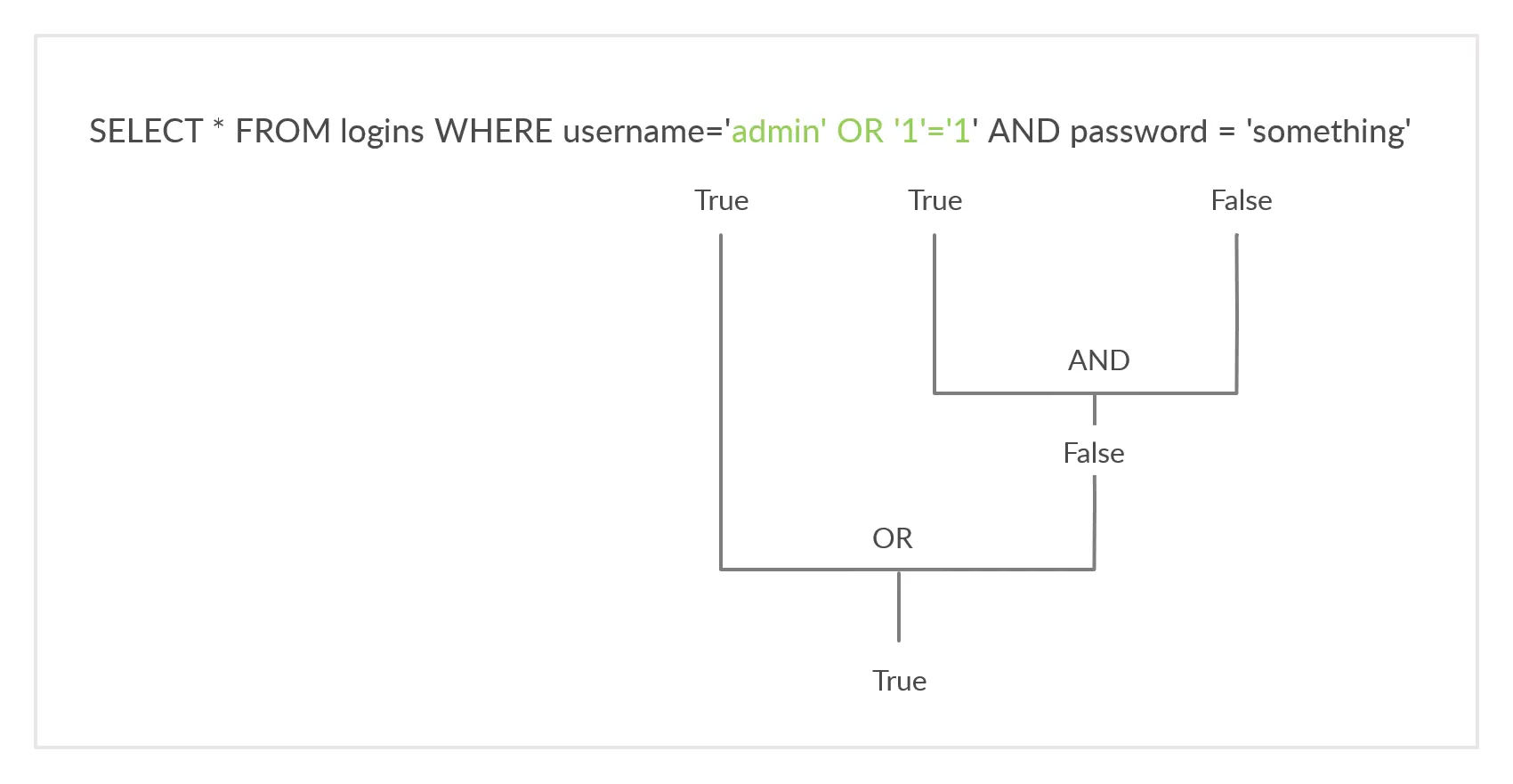
Zoom in
Comments
We can use comments as well to bypass the login. That is, instead of worrying about closing every single quote that remains open to prevent any syntax error, just add a comment after the entered payload
To do so, we can use -- - or #
Thus, the entered data would be the following
admin' OR 1=1 -- -And it would also bypass the authentication login form since the user exists, which returns TRUE, and no other conditions are evaluated due to the added comment